Moody's recently lowered the U.S. credit rating from its highest level to one step below. This follows similar moves by other rating agencies in recent years. The downgrade reflects concerns about America's growing debt and budget deficits. As Congress debates a new budget that could increase spending, many investors wonder how this affects their money.
Budget fights have created market uncertainty before
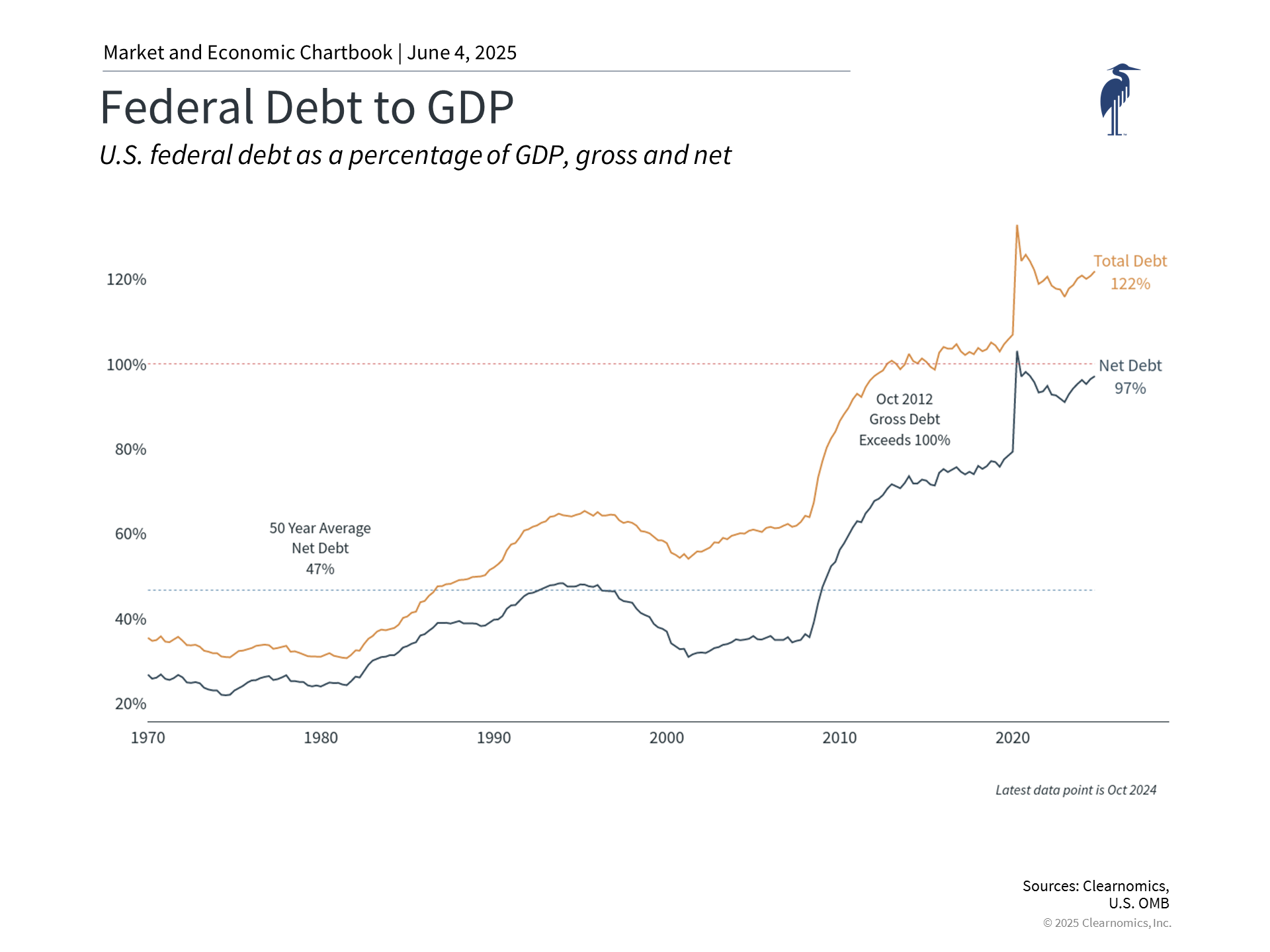 |
Budget negotiations and debt ceiling debates have caused market swings for years. Examples include the 2011 credit downgrade, the 2013 fiscal cliff, and government shutdowns. However, agreements were always reached eventually, and markets recovered.
Even after the shocking 2011 downgrade, the S&P 500 stock index bounced back within months. Despite these downgrades, U.S. Treasury bonds are still seen as safe investments during tough times.
While these fiscal issues are real concerns, it's important not to overreact with your investments. Past challenges led to temporary uncertainty, but markets have historically recovered. A steady, long-term investment approach works better than trying to time the market based on Washington news.
Tax cuts from 2017 are likely to be extended
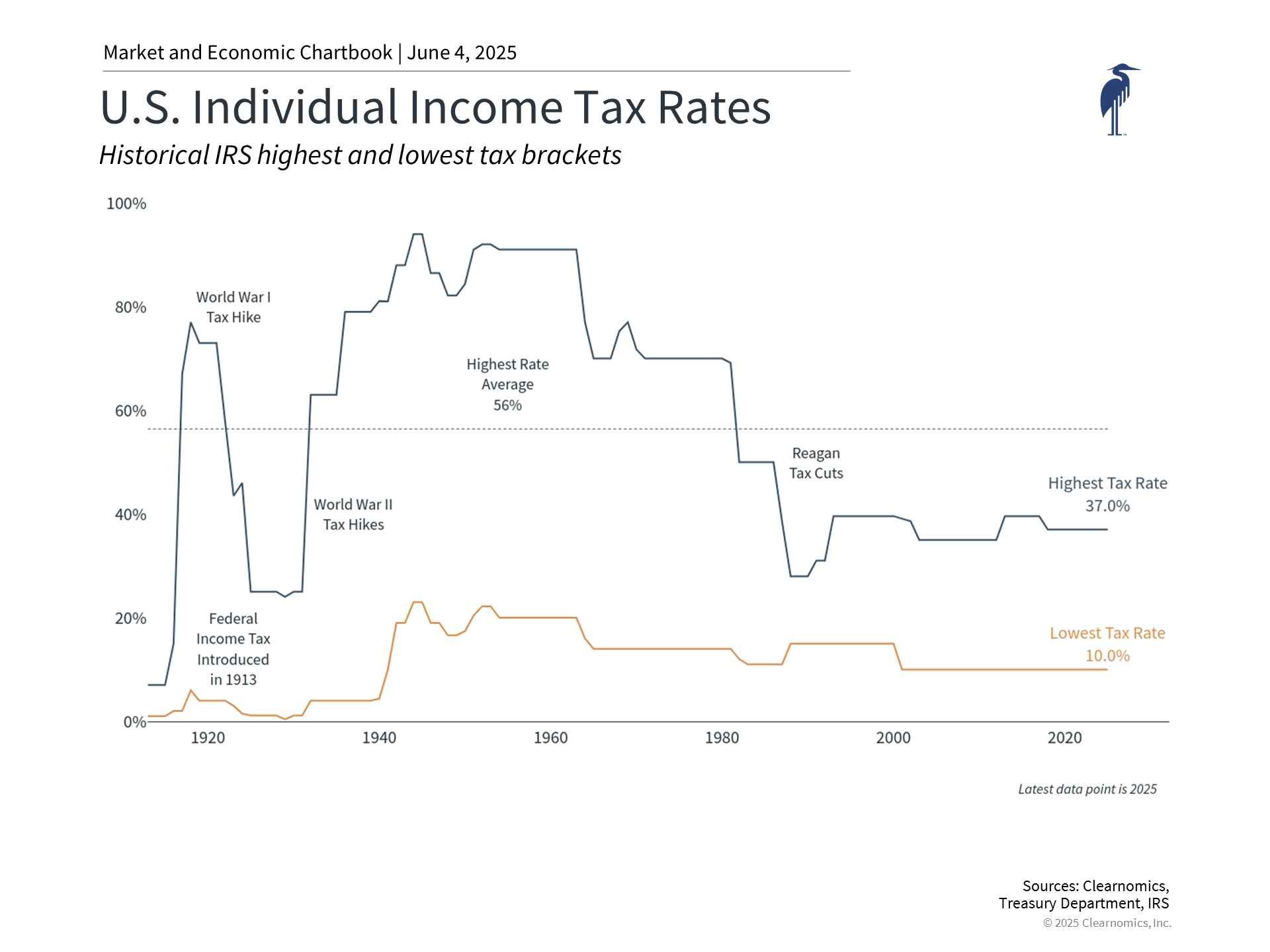 |
Congress is working on a new budget bill that would extend individual tax cuts from the Tax Cuts and Jobs Act. These cuts would otherwise expire at the end of 2025. Extending them would prevent a "tax cliff" where rates would jump back to higher levels.
The proposed tax package includes many changes for individuals and businesses:
For Individuals:
- Tax rates would become permanent, with a top rate of 37%
- Child tax credit would increase from $2,000 to $2,500
- State and local tax deduction cap might increase from $10,000 to $30,000
- Tips and overtime pay would be tax-free through 2028
- Auto loan interest would be tax-deductible through 2028
For Businesses:
- Pass-through business deduction would increase from 20% to 23%
- 100% bonus depreciation would return for qualified assets
- Research and development tax deductions would be restored
Budget deficits may keep growing
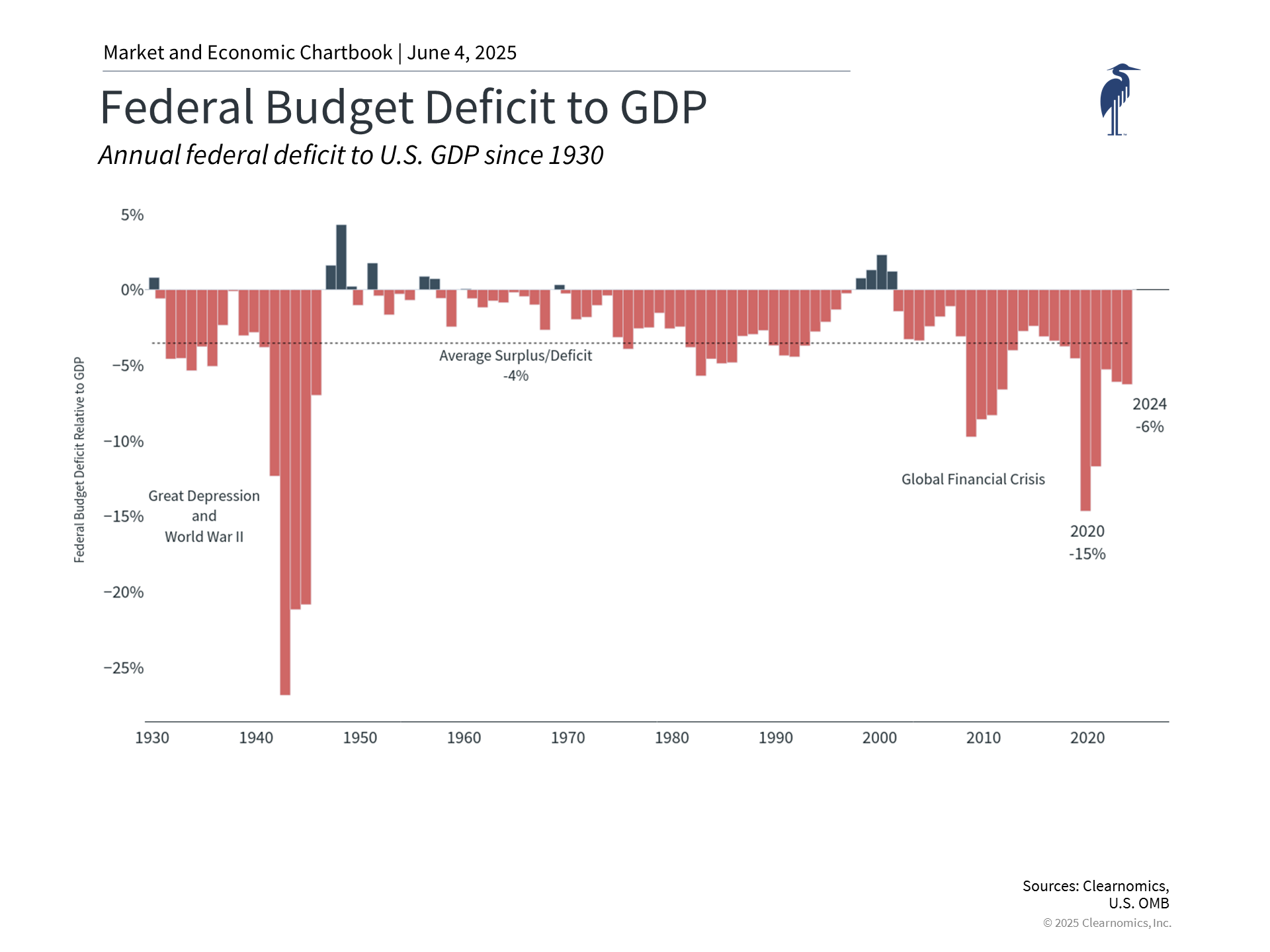 |
While the proposal includes about $1.6 trillion in spending cuts, tax cuts and other spending increases outweigh these savings. The national debt already exceeds $36 trillion, or about $106,000 per American. The proposed budget could add an estimated $3 trillion or more to the debt over ten years.
The debt has grown significantly in recent decades, with interest payments rising. Most federal spending goes to programs like Social Security and Medicare, making cuts politically difficult. This is why some worry tax rates may eventually need to rise.
However, markets have historically performed well across different levels of government debt. Some of the strongest market returns have actually occurred after the worst deficits, since these often coincided with economic crises when markets were at their lowest points.
The bottom line? The U.S. credit rating downgrade highlights long-term fiscal concerns, and the current budget battle could add to these issues. However, history shows that staying invested with a long-term plan remains the best approach for investors.