In November, financial markets went through a bumpy period that affected many types of investments. Even though stocks, bonds, and international investments have performed well so far this year, investors are worried about technology companies focused on artificial intelligence (AI) and whether the Federal Reserve (the Fed, which is America's central bank) will lower interest rates. Adding to the confusion, a government shutdown delayed important economic reports, making it harder to understand how the economy is doing.
Despite these ups and downs, many investments recovered by month's end. This shows why it's important for long-term investors to maintain a balanced mix of investments that can handle market swings. Successful investing means staying focused on your long-term goals instead of reacting to short-term news.
What happened in markets and the economy during November
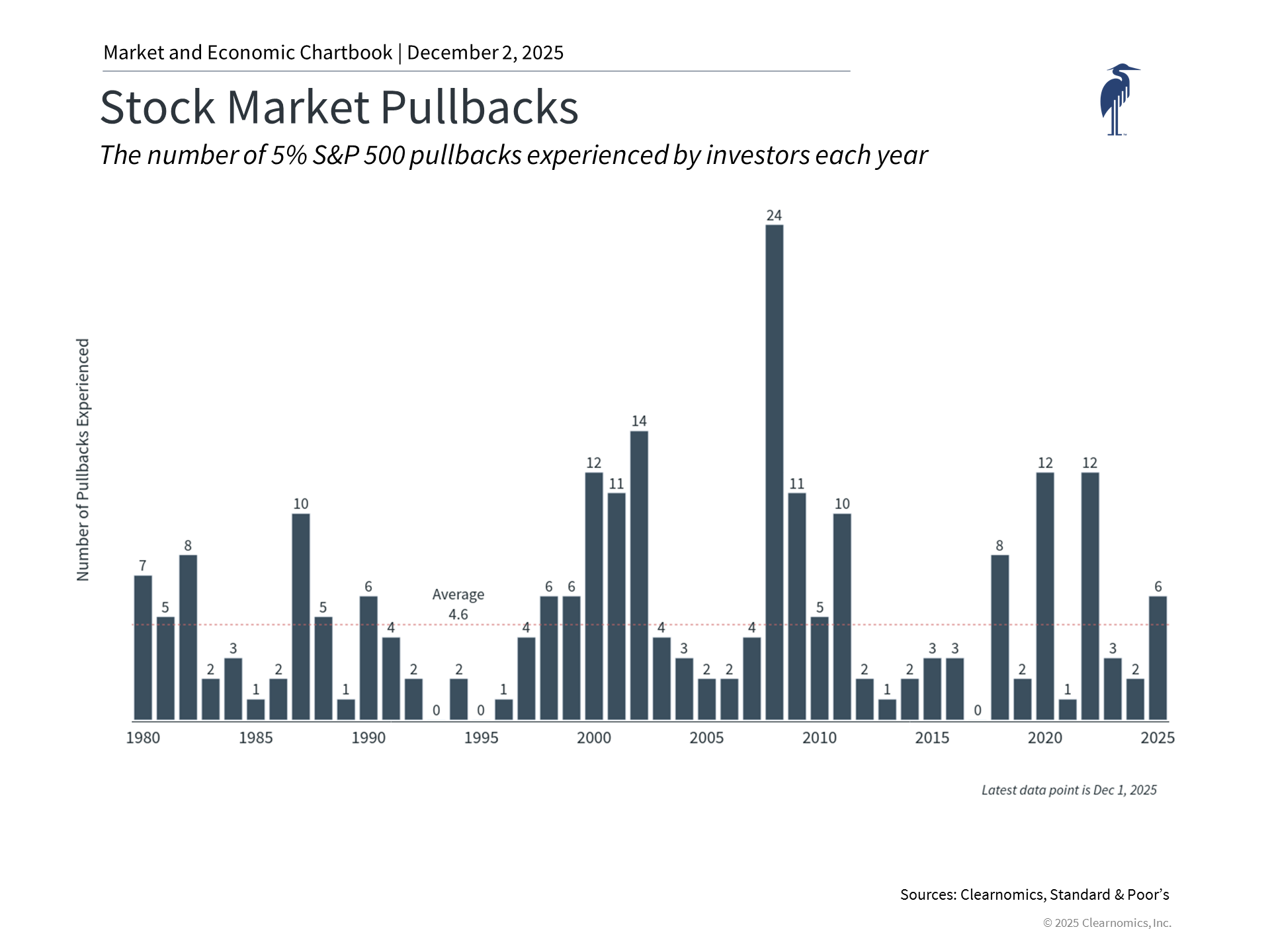 |
In November, investors temporarily moved away from riskier investments like technology stocks, lower-quality bonds, and cryptocurrencies. This happened mainly because people questioned whether AI-related investments were worth their high prices and because expectations changed about Fed interest rate cuts. The S&P 500 (a major stock index) had its sixth decline of 5% or more this year, but still ended the month slightly positive.
AI-focused technology stocks had their worst week since April. Investors worried about these companies' spending levels and whether stock prices had risen too high. However, many of these companies reported strong sales and profits for the third quarter. Some stocks, including those in the Magnificent 7 group, bounced back after releasing their results.
Cryptocurrencies also fell sharply during this period. Bitcoin dropped over 30% from its early October highs above $125,000, briefly trading below $85,000. This shows that cryptocurrencies can be highly unpredictable and go through boom-and-bust cycles. This is why maintaining a proper mix of investments continues to be important.
Bonds performed well in November as long-term interest rates declined. The bond market has gained 7.5% so far this year, its best performance since 2020. This has helped provide stability to balanced investment portfolios.
The government shutdown ended but uncertainty continues
 |
The government shutdown ended after 43 days, but the federal government is only funded through the end of January 2026. This means political uncertainty will return in just a couple of months. However, markets generally looked past the shutdown, even though the lack of economic data made things more challenging.
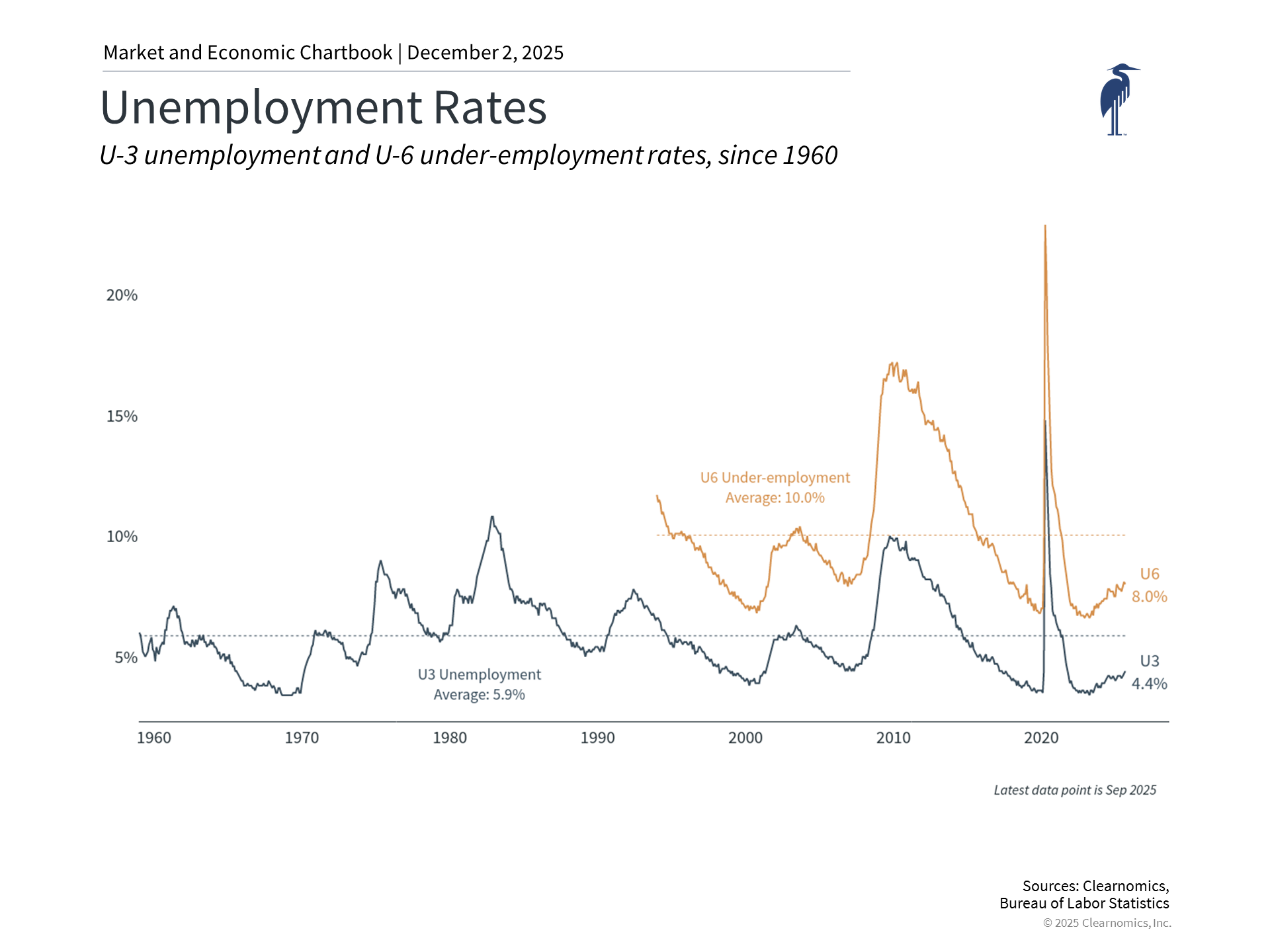
The government released the delayed September jobs report, which showed better-than-expected job gains. However, revised figures show that 4,000 jobs were lost in August. The unemployment rate edged up to 4.4% in September, its highest level since October 2021, though this is still relatively low historically. A full October jobs report will not be published since surveys were not conducted during that month.
Expectations for Fed rate cuts have changed
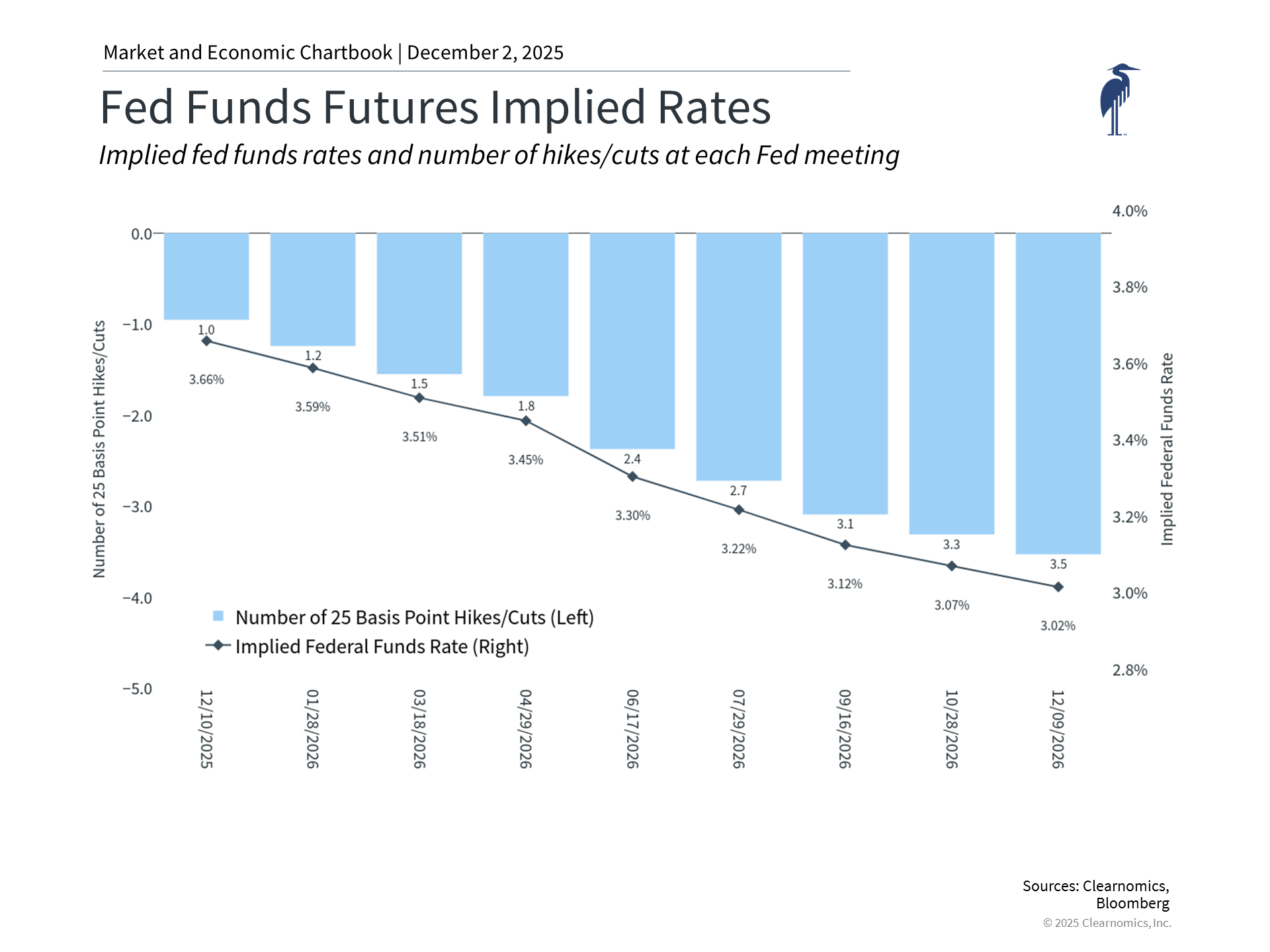 |
These data delays mean the Federal Reserve will make its mid-December decision without having complete economic information. Market expectations for a rate cut have shifted significantly. Currently, markets expect the Fed will cut rates in December and then again in April or June 2026.
Other economic data, such as consumer confidence (how optimistic people feel about the economy), has also worsened. This reflects ongoing concerns among Americans about job security, higher prices, and their overall financial situations.
The bottom line? November's market swings and ongoing economic uncertainty remind us that ups and downs in the stock market are normal. Investors should maintain a long-term perspective as we approach year end.